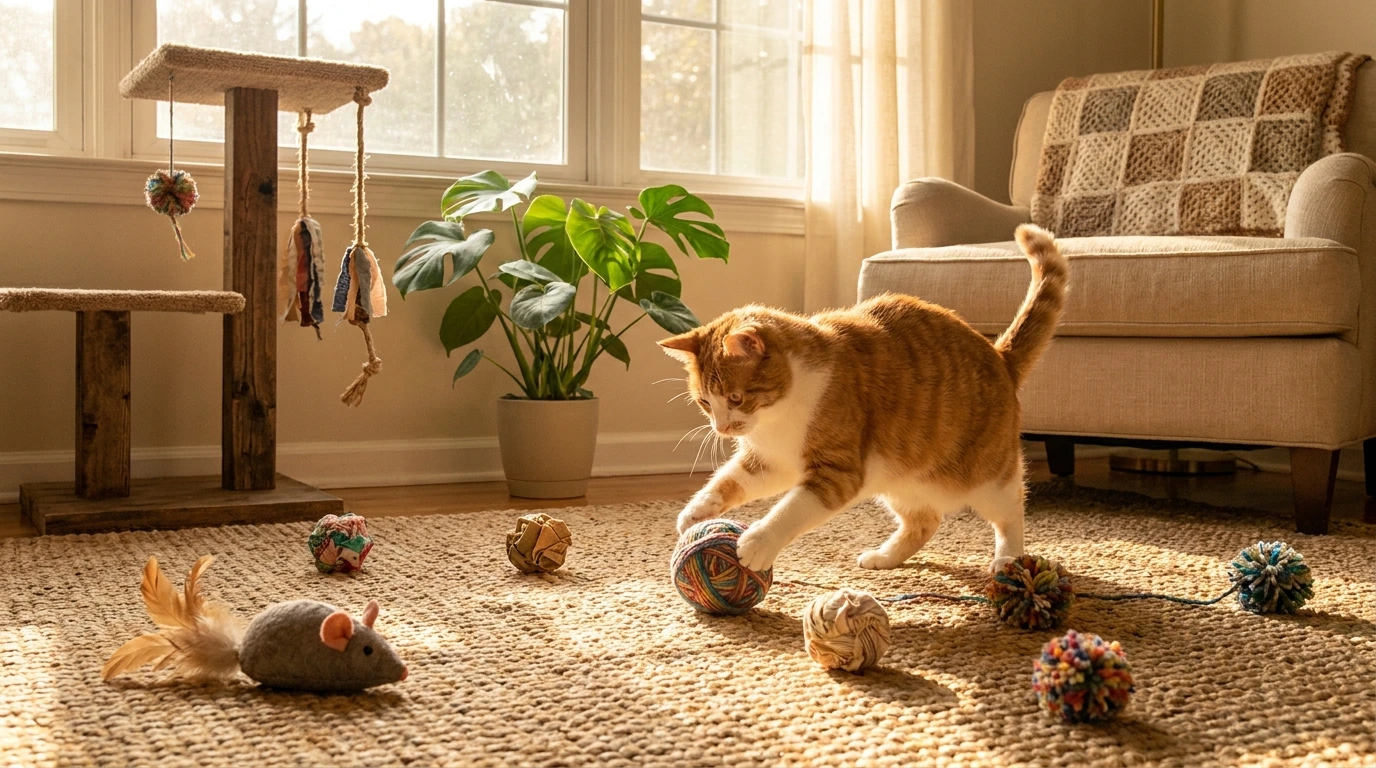
Creating engaging and stimulating toys for your feline friend at home can be a rewarding experience for both you and your cat. Homemade cat toys not only save money but also allow you to customize them to suit your pet’s unique preferences. This article will guide you through various ideas and tips for making cat toys at home, ensuring your kitty remains entertained and active.
Why Homemade Cat Toys Are Beneficial
Homemade cat toys offer several advantages over store-bought options. They are often more affordable, customizable, and can be made from safe materials you already have at home.
Cost-Effectiveness
Purchasing cat toys can quickly add up, especially if your cat tends to lose or destroy them. By making toys at home, you can save money while still providing your pet with the stimulation they need.
Customization
Every cat has its own personality and preferences. By creating toys tailored to your cat’s interests, you can ensure they find their new playthings engaging and enjoyable. For example, if your cat loves to chase, you can make toys that roll or dangle.
Safety
Homemade toys allow you to control the materials used, ensuring they are safe for your cat. You can avoid toxic substances often found in commercial toys and opt for natural materials instead.
Simple DIY Cat Toy Ideas
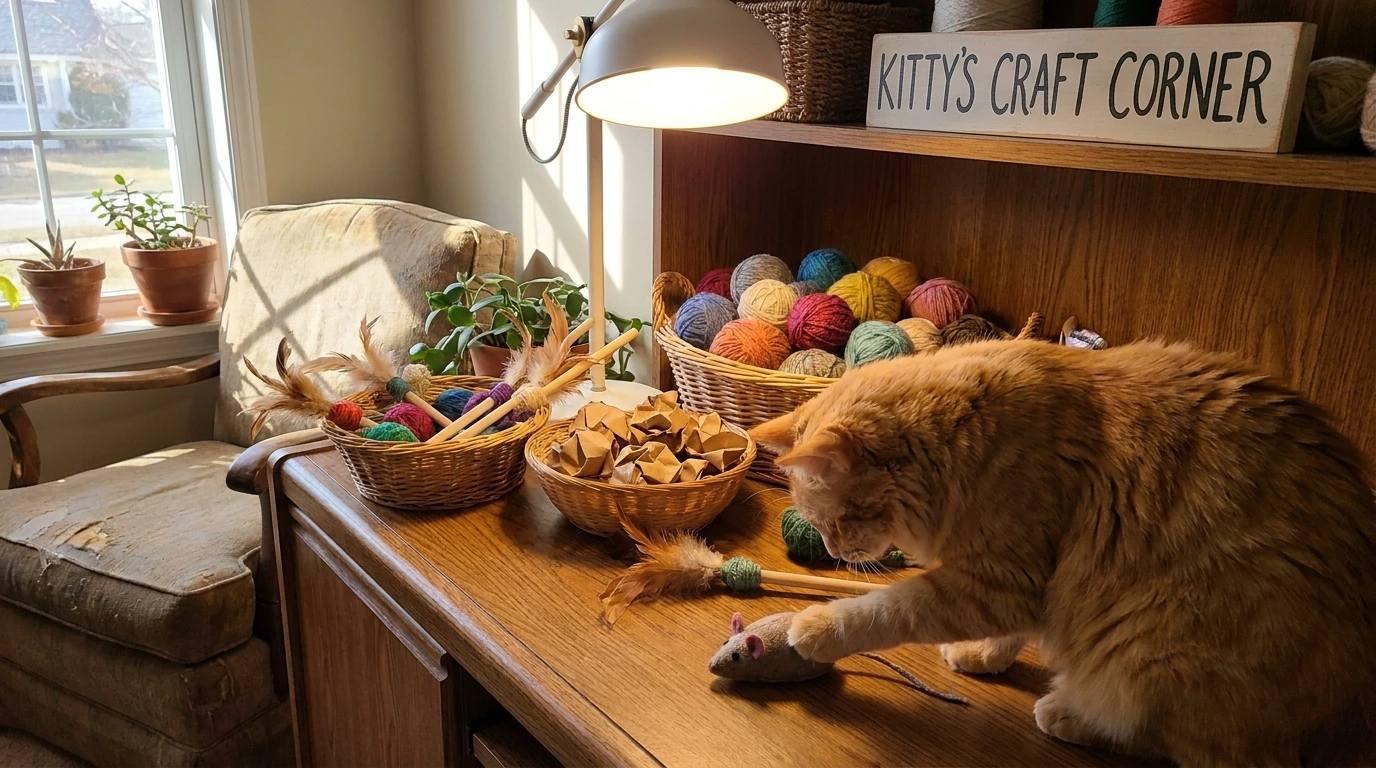
Here are some easy and fun ideas for making cat toys at home. These projects require minimal materials and can be completed in a short amount of time.
1. Sock Fish Toy
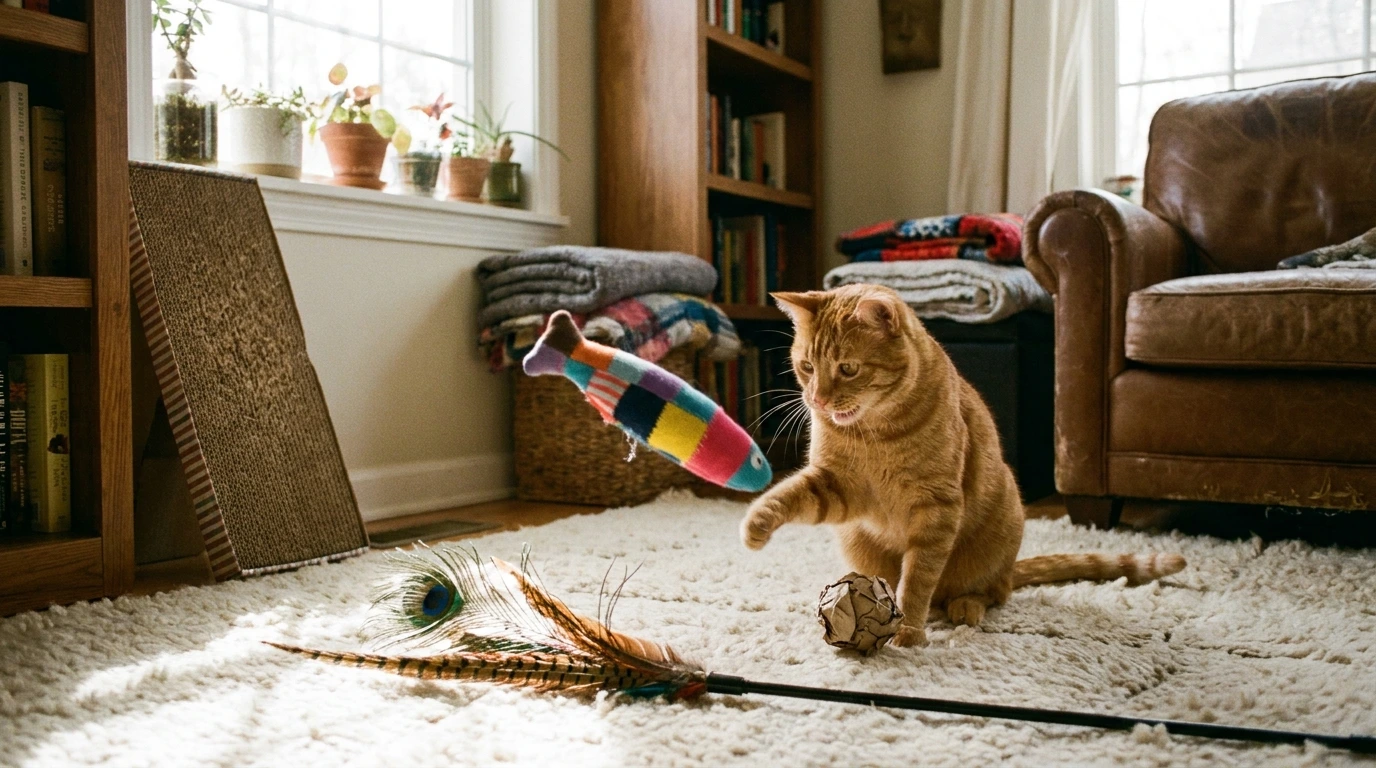
Transform an old sock into a fun fish-shaped toy. Fill a clean sock with catnip or crumpled paper for added texture and sound. Sew or tie the end securely and let your cat enjoy batting it around.
2. Feather Wand
Use a wooden dowel or a sturdy stick to create a feather wand. Attach feathers or strips of fabric to one end using string or glue. This toy encourages interactive play, allowing you to engage your cat in a fun and active way.
3. Cardboard Scratcher
Save your old cardboard boxes to create a scratching surface. Cut the cardboard into strips and glue them together in a rectangular shape. This DIY scratcher will help keep your cat’s claws healthy and satisfy their instinct to scratch.
4. Paper Ball
Simply crumple a piece of paper into a ball. This lightweight toy is perfect for batting and chasing, and it’s an excellent way for your cat to expend energy. You can also add a bit of catnip inside for extra attraction.
5. Treat Dispenser Ball
Repurpose a plastic bottle by cutting holes in it, large enough for treats to fall out. Fill the bottle with your cat’s favorite treats and let them roll it around to get the goodies. This toy not only entertains but also stimulates your cat’s problem-solving skills.
Tips for Making Effective Cat Toys
When creating cat toys, there are a few tips to keep in mind to ensure they are safe and enjoyable for your pet.
Use Non-Toxic Materials
Ensure that all materials used are safe for your cat. Avoid small parts that could pose a choking hazard and refrain from using toxic substances like certain glues or paints.
Incorporate Variety
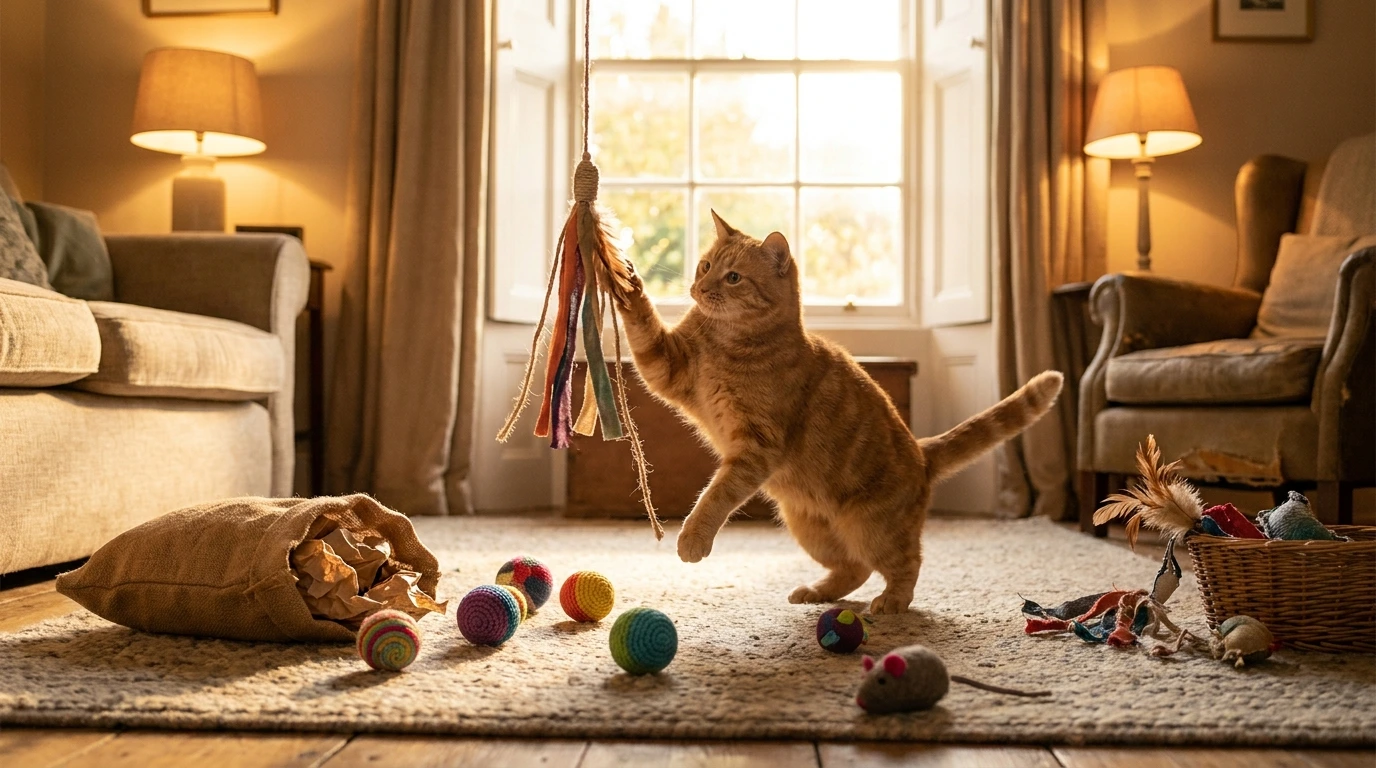
Cats can easily get bored with the same toys. To keep their interest piqued, create a variety of toys with different textures, sounds, and movements. Consider rotating toys to keep the playtime fresh and exciting.
Regularly Inspect Toys
Homemade toys may wear out over time. Check them regularly to ensure they are still safe for your cat to play with. Discard any toys that are damaged or pose a risk.
FAQs
Can I use any type of fabric to make cat toys?
While many fabrics are suitable for homemade cat toys, it is best to avoid synthetic materials that may contain harmful chemicals. Opt for natural fabrics like cotton or wool.
How often should I change my cat’s toys?
Changing your cat’s toys regularly can help prevent boredom. Aim to introduce new toys every few weeks and rotate existing ones to keep your cat engaged.
What can I do if my cat is not interested in the toys I made?
If your cat shows little interest, try different textures, sounds, or types of toys. Some cats prefer interactive play, while others enjoy toys they can bat around alone. Experiment to discover what your cat enjoys most.
Conclusion
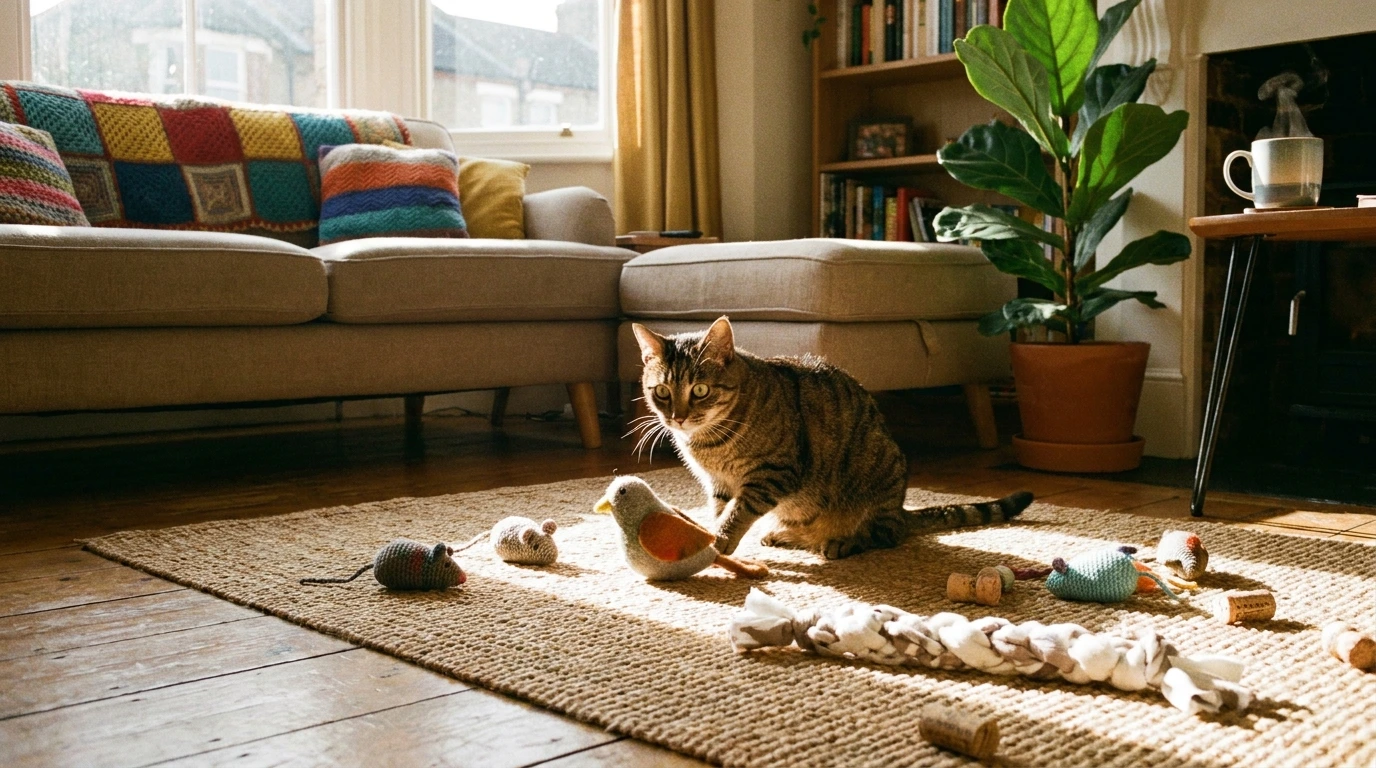
Making cat toys at home is a fantastic way to provide your pet with entertainment while ensuring safety and cost-effectiveness. By utilizing simple materials and following the ideas outlined in this article, you can create a variety of engaging toys tailored to your cat’s preferences. Regularly updating and inspecting these toys will keep playtime fresh and enjoyable for your furry companion. With a little creativity, you can foster a stimulating environment that caters to your cat’s playful nature.