
Creating a DIY cat climbing wall can transform your home into a feline playground while providing your cat with much-needed exercise and mental stimulation. Cats are natural climbers and explorers, and a climbing wall allows them to engage their instincts in a safe and controlled environment. This guide will walk you through the essential steps to design and build a climbing wall that caters to your cat’s needs, ensuring both fun and functionality.
Understanding Your Cat’s Needs
Before embarking on your DIY project, it’s crucial to understand your cat’s behavioral and physical needs. Cats require vertical space to feel secure and engaged. Climbing walls satisfy these instincts and help prevent boredom-related behaviors.
Behavioral Aspects
Cats are territorial creatures that enjoy surveying their surroundings from high vantage points. A climbing wall can offer them this perspective, making them feel more confident and secure. Additionally, it can reduce stress and anxiety by providing an outlet for their energy.
Physical Benefits
Climbing walls promote physical activity, helping to maintain your cat’s health. Regular climbing can improve muscle tone, coordination, and agility. For overweight cats, this is particularly important as it encourages them to move more and can assist in weight loss.
Designing Your Cat Climbing Wall
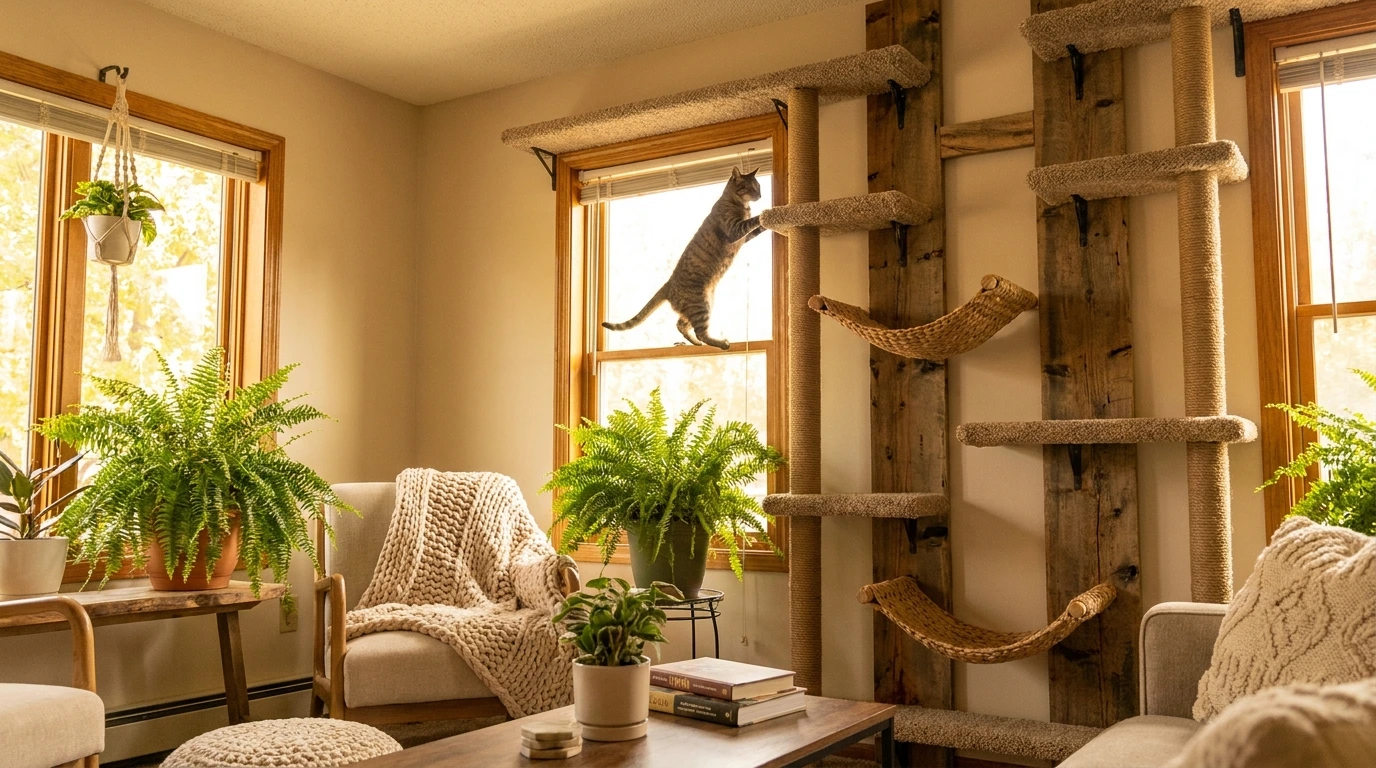
The design of your climbing wall should consider both aesthetics and functionality. You can customize it to fit your space while providing different heights and surfaces for your cat to explore.
Choosing the Right Location
Select a location that is both accessible and visible. Common choices include living rooms, hallways, or even near windows where cats can watch the outside world. Ensure that the area has enough wall space and is free from obstructions.
Materials Needed
Gather the right materials for your project. Commonly used items include wooden planks, brackets, carpet or sisal for traction, and screws. You may also want to include shelves, ramps, or boxes to create a more engaging environment. Ensure all materials are safe and non-toxic for your pets.
Building the Climbing Wall
Once you have your materials and design in place, it’s time to start building. Follow these steps for a successful DIY climbing wall.
Step-by-Step Construction
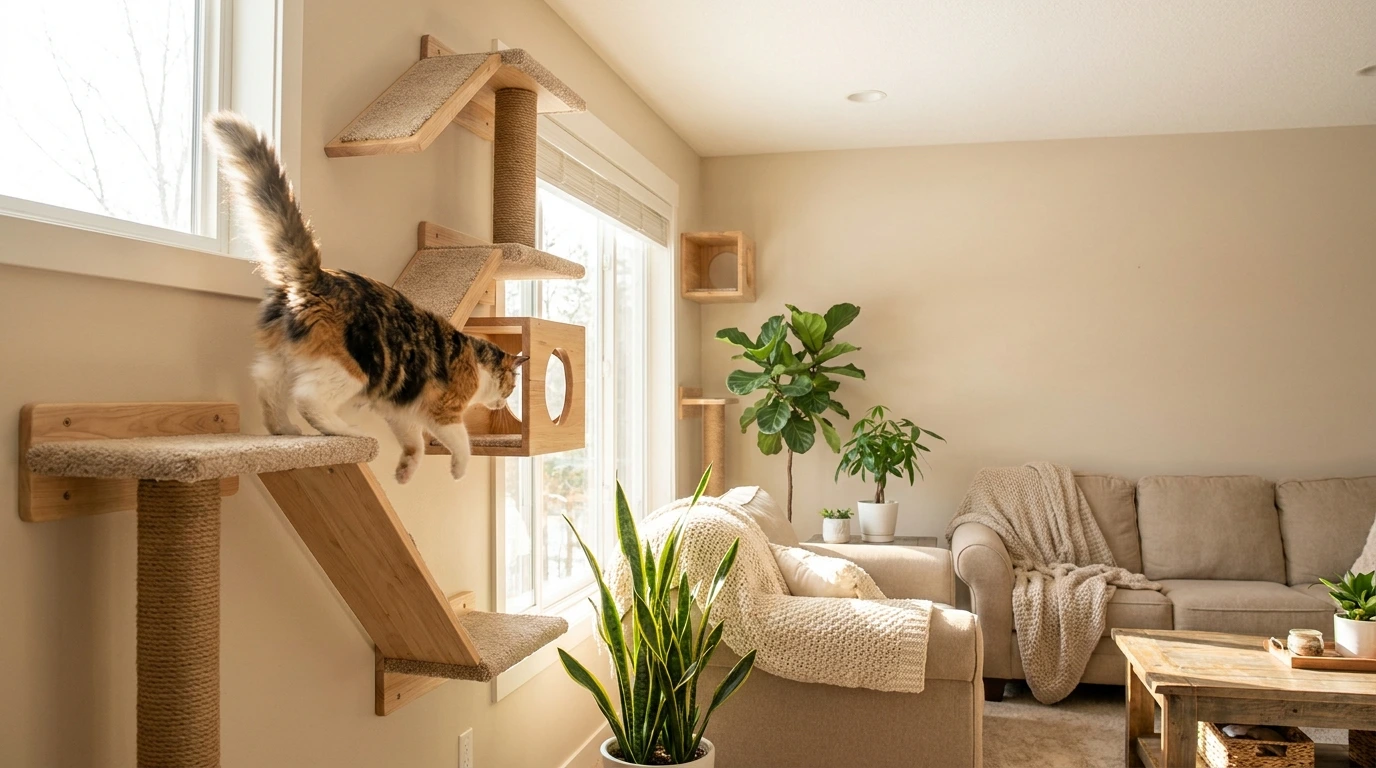
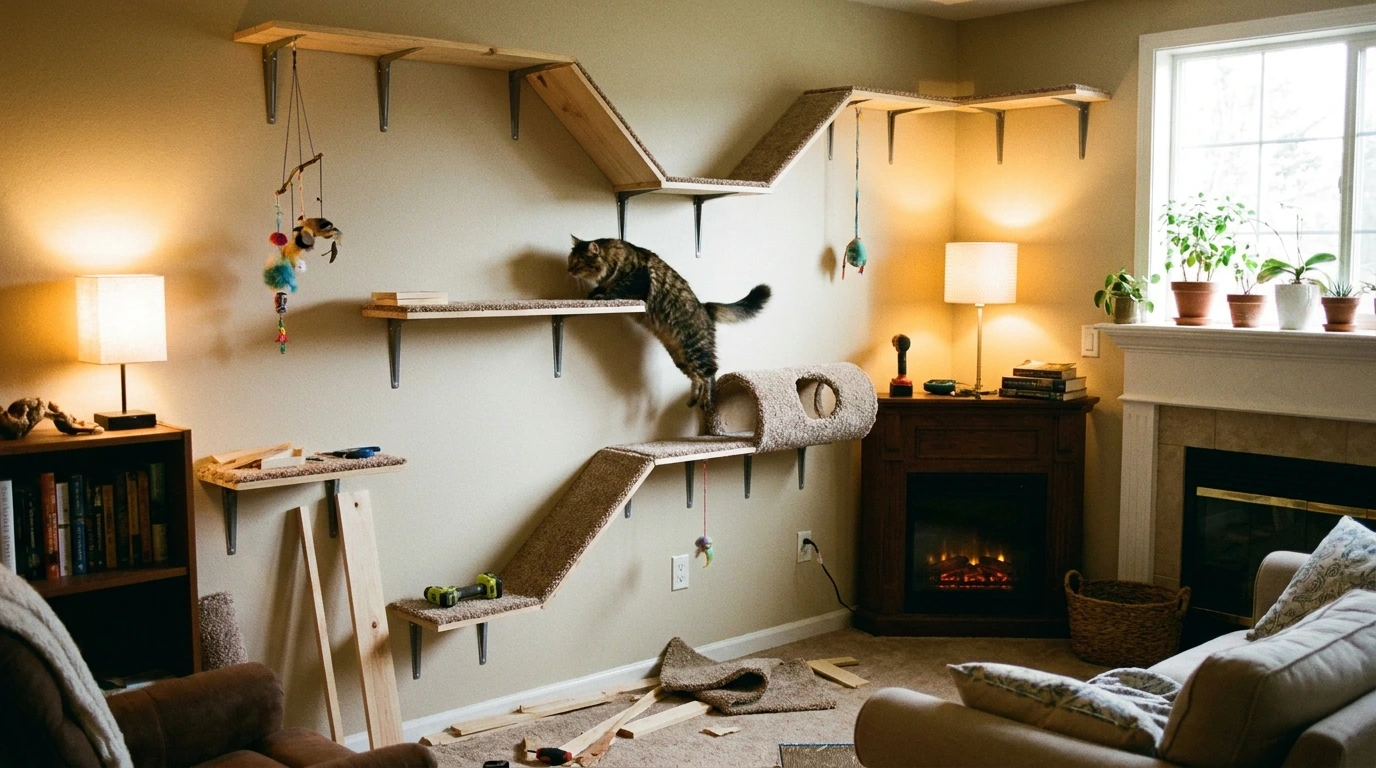
Begin by measuring and marking where you want to install your climbing wall. Cut your wooden planks to the desired lengths for shelves. Use brackets to securely attach these shelves to the wall. Be sure to check that they can support your cat’s weight.
Adding Traction
To prevent slips, cover the shelves with carpet or sisal. This gives your cat a better grip and makes the climbing experience safer. Ensure the edges are smooth to prevent injuries.
Incorporating Features
To make the climbing wall more dynamic, consider adding features such as ramps, tunnels, or hanging toys. Use different levels to create a more interesting path for your cat to navigate, which can help maintain their interest over time.
Safety Considerations
Safety should always be a priority when building a climbing wall. Ensure that everything is securely fastened and that there are no sharp edges or small parts that could pose a choking hazard.
Stability and Weight Capacity
Test the stability of each shelf before allowing your cat to use the climbing wall. It should be able to hold your cat’s weight without wobbling. If it’s not stable, reinforce it with additional brackets or supports.
Monitoring Your Cat
After constructing the climbing wall, monitor your cat’s initial interactions with it. Cats may take time to adjust to new structures. Observe how they use the wall and make adjustments as needed to ensure their safety and comfort.
Maintaining the Climbing Wall
Regular maintenance is essential to keep your climbing wall safe and functional. Check for any wear and tear, especially in the areas that receive the most traffic.
Regular Inspections
Inspect the structure periodically for loose screws or brackets and ensure that the surfaces remain clean. Cats can shed fur, and debris can accumulate, so consider a regular cleaning schedule.
Updating Features
As your cat ages or their preferences change, you may want to update the climbing wall. Adding new elements or rearranging existing ones can keep your cat engaged and interested in their climbing space.
FAQs
How high should I build the climbing wall?
The height of the climbing wall should depend on your cat’s abilities and the space available. Generally, it’s advisable to keep shelves within 5 to 6 feet high to ensure safety.
What materials are safest for my cat?
Choose non-toxic, durable materials such as untreated wood, carpet, or sisal. Avoid any materials that may splinter or have sharp edges, as they can pose risks to your cat.
How can I encourage my cat to use the climbing wall?
Encourage your cat to explore the wall by placing treats or their favorite toys on the shelves. You can also spend time playing with them near the climbing wall to spark their interest.
Can I customize the climbing wall for multiple cats?
Yes, you can design the climbing wall with multiple levels and various features to accommodate several cats. Ensure each shelf is spacious enough to allow for more than one cat to use it comfortably.
Conclusion
Building a DIY cat climbing wall is a rewarding project that benefits both you and your feline friend. By understanding your cat’s needs and carefully designing the structure, you can create a stimulating environment that promotes physical activity and mental engagement. With proper maintenance and periodic updates, your cat climbing wall can provide endless entertainment and enrichment for years to come.