
Creating a DIY cat tunnel with lights can be an exciting project that not only entertains your feline friend but also enhances their play environment. Cats are naturally curious creatures, and providing them with a personalized space that combines fun and safety is essential for their well-being. This guide will walk you through the steps to create a cat tunnel equipped with lights and offer tips on how to make it both functional and visually appealing. From materials needed to design ideas, this project is perfect for cat lovers looking to add a unique touch to their pet’s playtime.
Materials Required for Your DIY Cat Tunnel
Before diving into the construction process, it’s crucial to gather all the necessary materials. Here’s a list to help you get started:
Essential Supplies
To build a sturdy and engaging cat tunnel, you will need the following supplies:
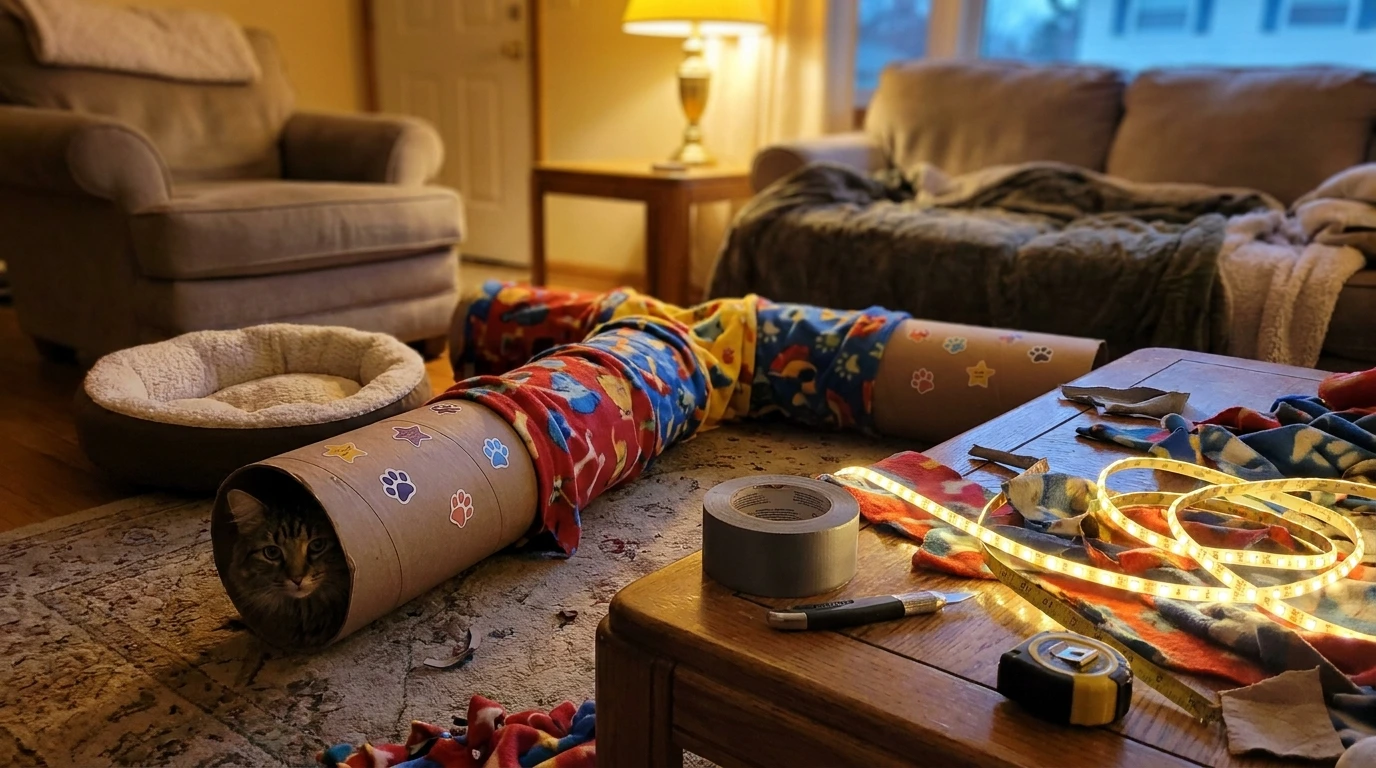
Cardboard tubing (such as carpet tubes or large cardboard rolls) Strong adhesive (like hot glue or duct tape) Fabric (fleece or canvas) for covering the tunnel LED strip lights for illumination Scissors and a utility knife for cutting Measuring tape for accurate dimensions Optional: decorative elements (stickers, paint, etc.)
Choosing the Right Location
Location is key for ensuring your cat enjoys the tunnel. Select a space that is safe and easily accessible, such as a living room or play area. It’s also beneficial to place the tunnel near their favorite resting spots to encourage exploration and play.
Step-by-Step Guide to Building the Cat Tunnel
Once you have all the materials, it’s time to start building your cat tunnel. Follow these steps for a successful project.
Step 1: Measure and Cut the Tubing
Begin by measuring the length you want for your tunnel. A standard length ranges from three to six feet, depending on your space and your cat’s preferences. Use a utility knife to cut the cardboard tubing to the desired length.
Step 2: Create Entry and Exit Points
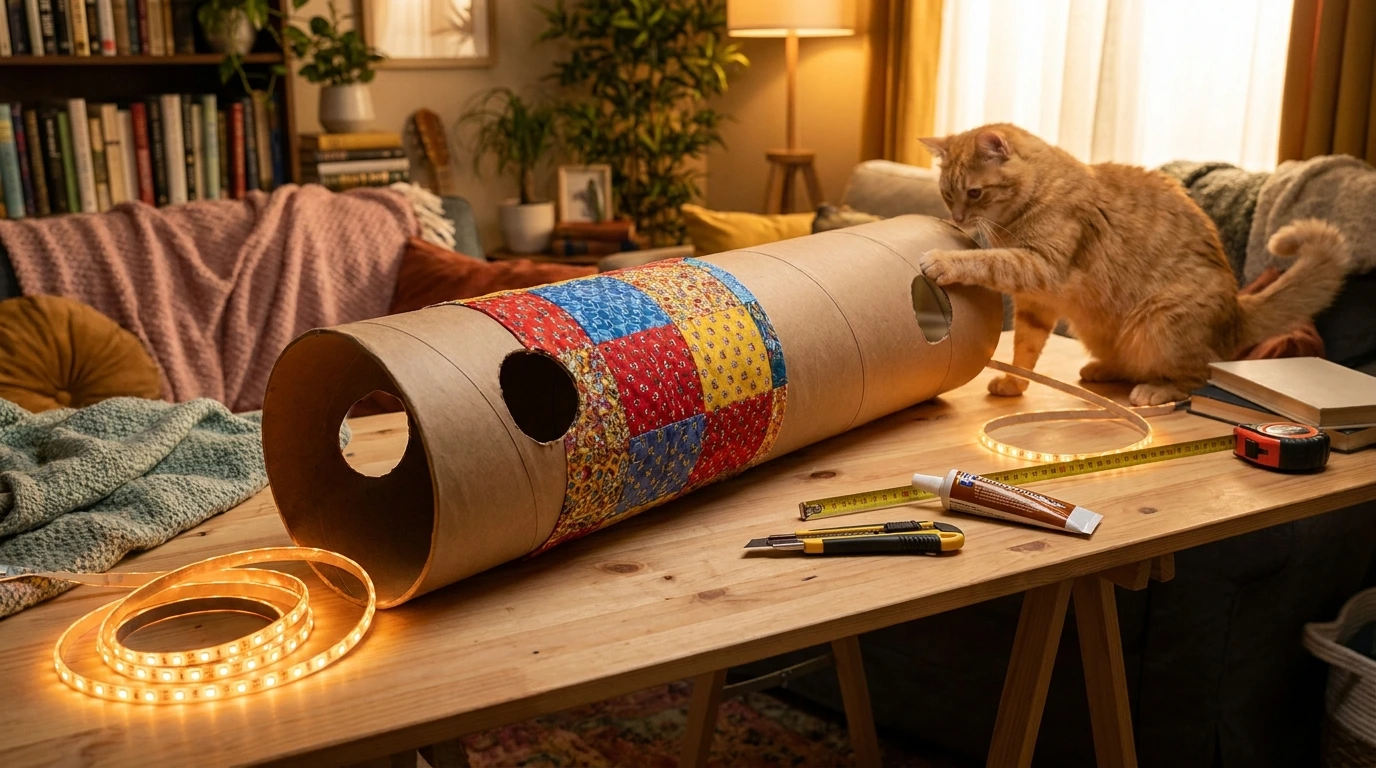
To make the tunnel more engaging, you can cut additional openings along the sides. These openings should be large enough for your cat to easily enter and exit but not so large that they compromise the tunnel’s structural integrity. A diameter of about six to eight inches is usually sufficient.
Step 3: Covering the Tunnel
Wrap the exterior of the tunnel with fabric to give it a softer feel and aesthetic appeal. Use strong adhesive to secure the fabric in place. If you want to add a personal touch, consider painting or decorating the tunnel with stickers that reflect your cat’s personality.
Step 4: Installing the LED Lights
For an added element of fun, install LED strip lights inside the tunnel. Choose battery-operated lights for convenience and to avoid messy wiring. Affix the LED strips along the inner edges of the tunnel using adhesive, making sure they are securely attached and won’t pose any danger to your cat.
Step 5: Final Touches and Safety Check
Once everything is assembled, inspect the tunnel thoroughly. Make sure there are no sharp edges, loose fabric, or exposed wires. Test the lights to ensure they work properly. Once you’re satisfied with the finished product, place the tunnel in its designated location.
Enhancing the Cat Tunnel Experience
While the tunnel itself is an exciting feature, you can take your cat’s playtime to the next level by incorporating additional elements.
Adding Toys and Treats
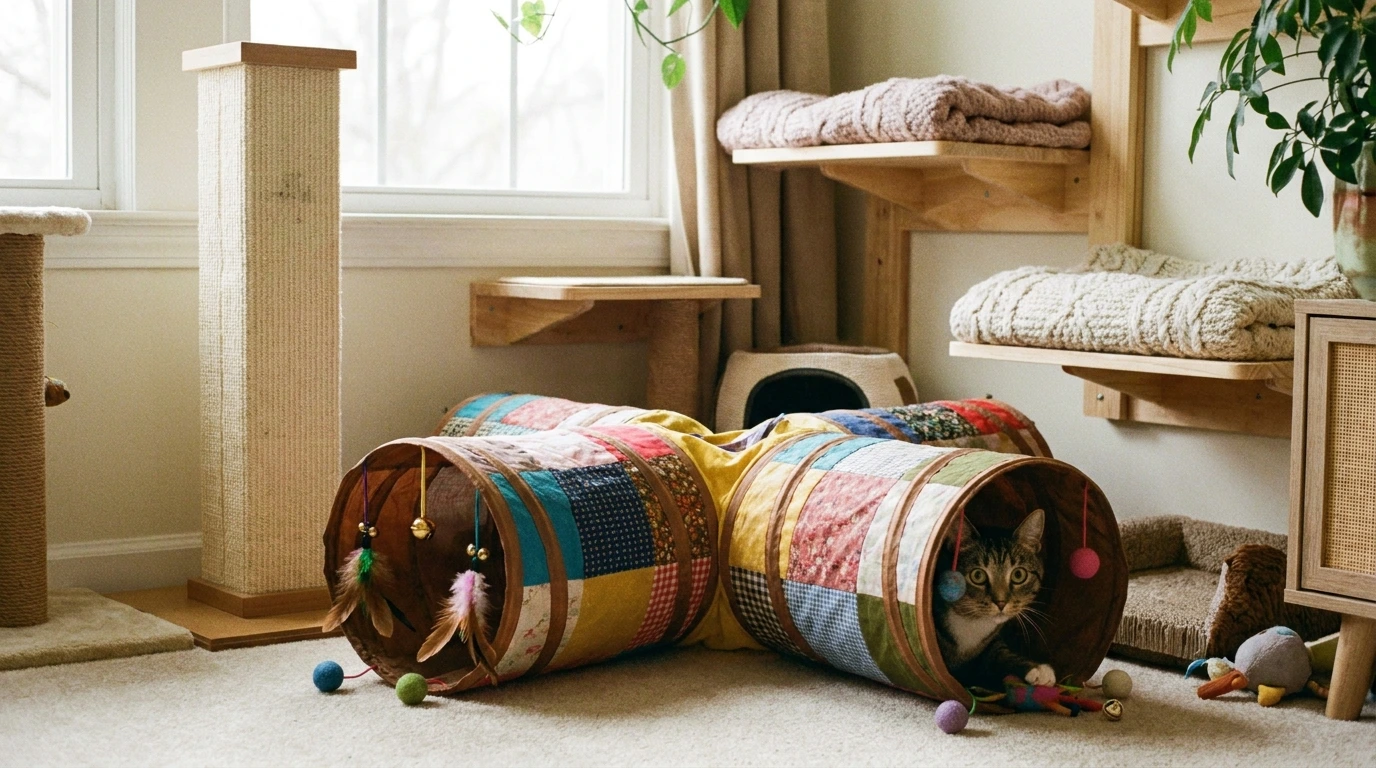
Consider placing toys or treats at either end of the tunnel to encourage your cat to explore. You can use dangling toys or small balls that your cat can chase inside the tunnel, making it an even more enticing space.
Creating a Play Area
Surround the tunnel with other play structures, like scratching posts or climbing shelves, to create a complete play area. This not only enriches your cat’s environment but also encourages exercise and exploration.
FAQs
How do I ensure the tunnel is safe for my cat?
To ensure safety, inspect the tunnel for any sharp edges, loose fabric, or exposed wiring. Use non-toxic materials and avoid any small parts that could be chewed and swallowed.
Can I customize the tunnel with different themes?
Absolutely! You can customize the tunnel with various colors, patterns, or themes. Consider using fabric that reflects your home decor or your cat’s personality to create a fun and cohesive look.
How often should I clean the cat tunnel?
It’s recommended to clean the tunnel regularly to maintain hygiene. Depending on usage, a weekly cleaning with a damp cloth or vacuuming can help remove fur and debris.
Will my cat actually use the tunnel?
Most cats are naturally curious and will enjoy exploring a new tunnel. To encourage your cat to use it, introduce them to the tunnel gradually and use treats or toys to entice them inside.
Conclusion
Building a DIY cat tunnel with lights is a rewarding project that can enhance your cat’s playtime while providing them with a unique space to explore. By following the steps outlined above and incorporating your personal touches, you can create a safe and engaging environment for your feline friend. Investing time in your pet’s play area not only entertains them but also fosters their physical and mental well-being, making it a worthwhile endeavor for any cat owner.