
Feeding your puppy a nutritious, balanced diet is crucial for their growth and overall health. While commercial puppy food is widely available, many pet owners are exploring homemade puppy food recipes as a healthier, more personalized option. This article delves into the benefits of homemade puppy food and offers a variety of recipes, ensuring your furry friend receives the essential nutrients they need to thrive.
Benefits of Homemade Puppy Food
Choosing to prepare homemade puppy food offers several advantages for both you and your pet. Understanding these benefits can help you make informed decisions about your puppy’s diet.
Control Over Ingredients
One of the primary benefits of homemade puppy food is the ability to control the ingredients. You can choose high-quality, fresh ingredients free from fillers, preservatives, and artificial additives commonly found in commercial dog foods. This transparency allows you to cater to your puppy’s specific dietary needs and preferences.
Customization for Dietary Needs
Every puppy is unique, and some may have specific dietary restrictions or preferences. Homemade recipes allow you to tailor meals to accommodate allergies, sensitivities, or specific health concerns. This customization can help prevent digestive issues and promote overall well-being.
Increased Freshness and Flavor
Homemade puppy food is often fresher and more flavorful than store-bought options. Puppies are more likely to enjoy their meals when prepared with fresh ingredients, which can lead to better eating habits and satisfaction during mealtime.

Essential Nutrients for Puppies
Before diving into recipes, it’s crucial to understand the essential nutrients your puppy needs for healthy growth and development. A well-balanced diet should include proteins, carbohydrates, fats, vitamins, and minerals.
Proteins
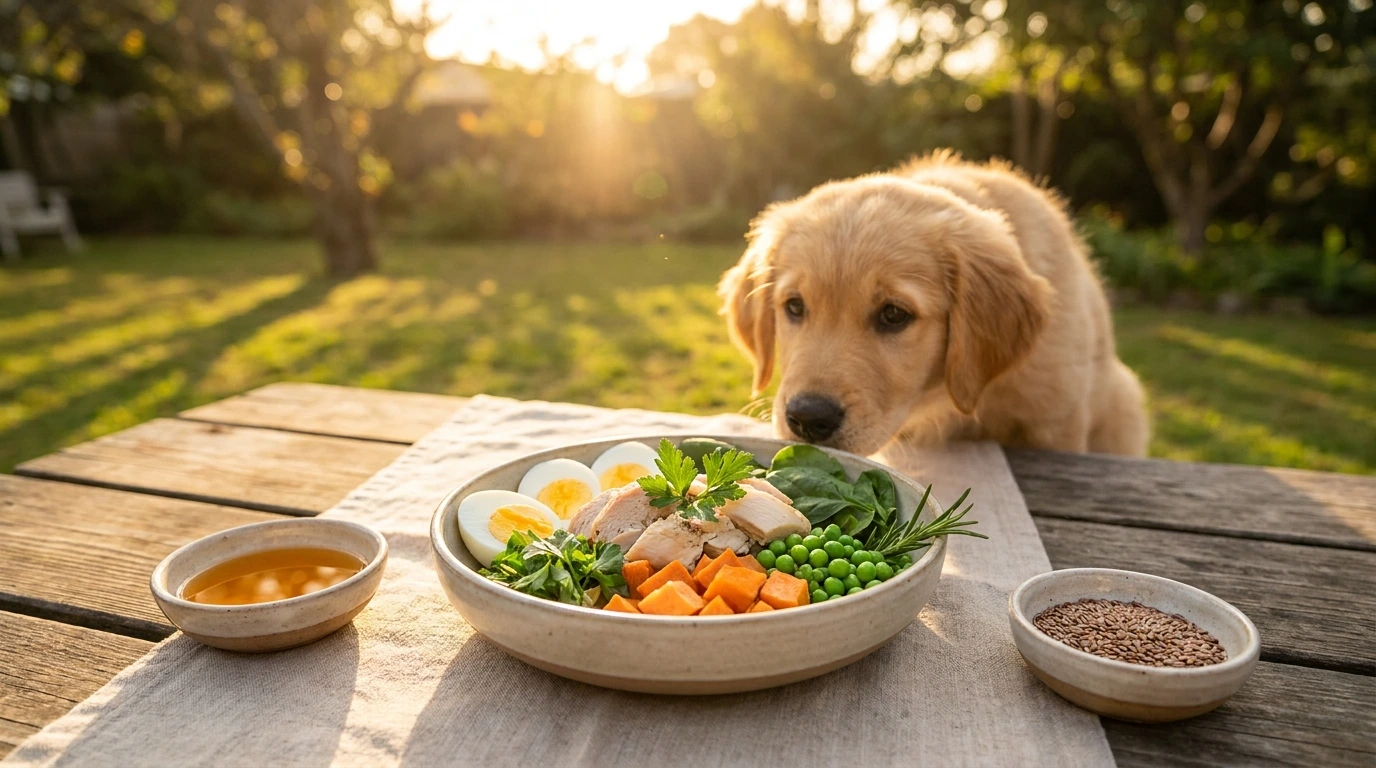
Proteins are vital for muscle development and overall growth. Sources of protein for homemade puppy food include lean meats, fish, eggs, and dairy products. Ensure that the protein content is appropriate for your puppy’s age and breed.
Carbohydrates
Carbohydrates provide energy and support digestive health. Whole grains like brown rice and oats, as well as vegetables like sweet potatoes and peas, are excellent sources of carbohydrates. They should be included in moderation to maintain a balanced diet.
Fats
Healthy fats are essential for brain development and skin health. Sources of healthy fats include fish oil, flaxseed oil, and chicken fat. These fats should be provided in appropriate amounts to avoid obesity.
Homemade Puppy Food Recipes
Now that you understand the benefits and nutritional requirements, here are some simple yet nutritious homemade puppy food recipes you can try.
Chicken and Rice Puppy Food
This classic recipe is easy to prepare and provides a balanced meal for your puppy.
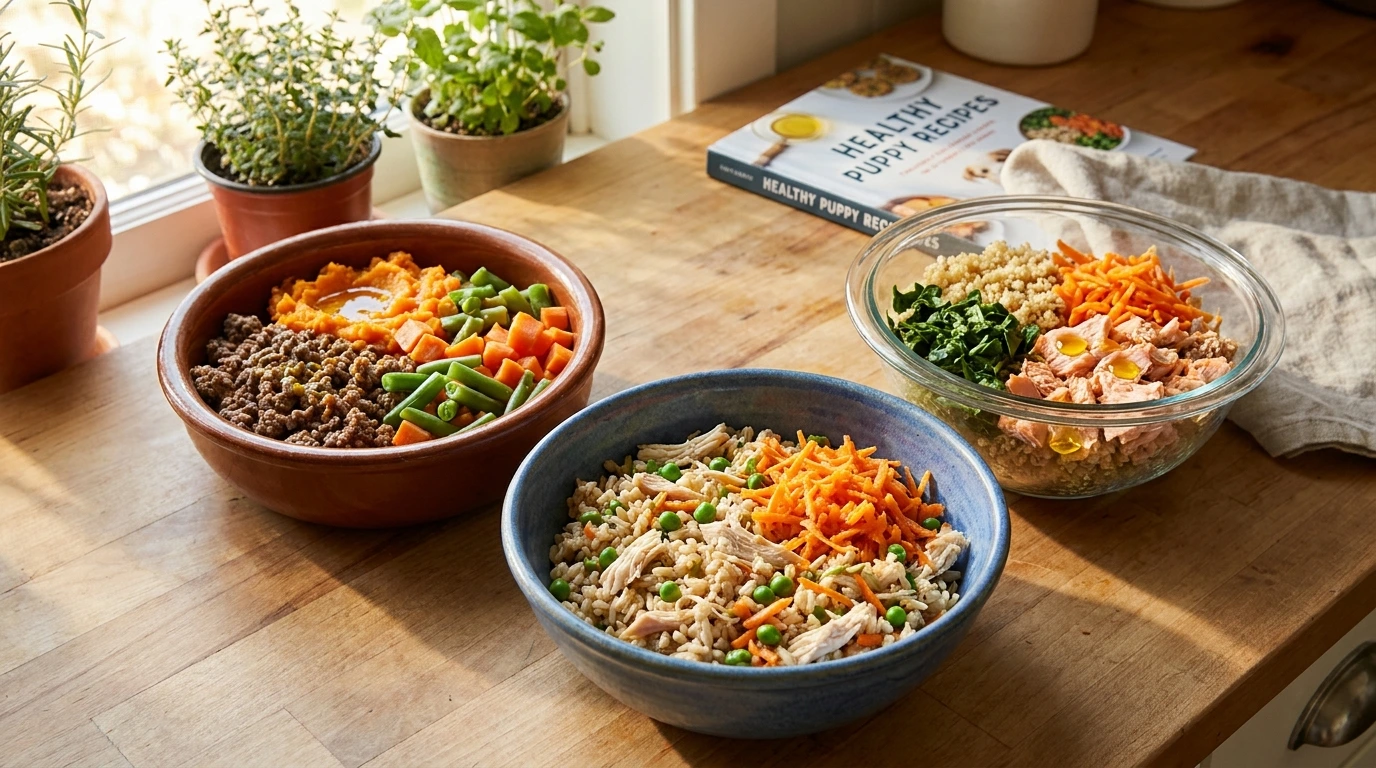
1 cup of cooked, shredded chicken 1 cup of cooked brown rice 1/2 cup of steamed carrots 1/2 cup of peas 1 tablespoon of fish oil
Combine all ingredients in a bowl and mix well. This recipe is rich in protein and carbohydrates, perfect for growing puppies.
Beef and Sweet Potato Puppy Food
This hearty recipe is packed with nutrients and flavor.
1 pound of ground beef 1 medium sweet potato, cooked and mashed 1/2 cup of green beans 1/2 cup of carrots 1 tablespoon of olive oil
Cook the ground beef in a skillet until browned. Add the sweet potato, green beans, and carrots, then mix in the olive oil. Allow it to cool before serving.
Fish and Vegetable Puppy Food
This recipe is ideal for puppies that enjoy fish and provides omega-3 fatty acids.
1 can of salmon (boneless and skinless) 1 cup of cooked quinoa 1/2 cup of spinach, chopped 1/2 cup of carrots, shredded 1 tablespoon of fish oil
Mix all ingredients in a bowl until well combined. This meal is rich in protein and healthy fats, promoting shiny coats and overall health.
FAQs
Can I feed my puppy only homemade food?
While homemade food can be nutritious, it’s essential to ensure that it meets all of your puppy’s nutritional needs. Consulting with a veterinarian or a pet nutritionist is advisable to create a balanced diet plan.
How often should I feed my puppy homemade food?
Puppies typically require three to four meals a day, depending on their age and breed. Portion sizes may vary, so it’s best to consult with a veterinarian for specific recommendations.
Are there any foods I should avoid when making homemade puppy food?
Yes, certain foods are toxic to dogs, including chocolate, grapes, onions, garlic, and avocados. Always research ingredients beforehand and avoid any harmful foods.
Conclusion
Homemade puppy food recipes can provide a nutritious and enjoyable diet tailored to your puppy’s specific needs. By understanding the essential nutrients and trying out various recipes, you can ensure your furry friend grows healthy and happy. Always consult with a veterinarian to confirm that your homemade meals are balanced and suitable for your puppy’s diet. With a little effort and care, you can create delicious meals that contribute to your puppy’s overall well-being.